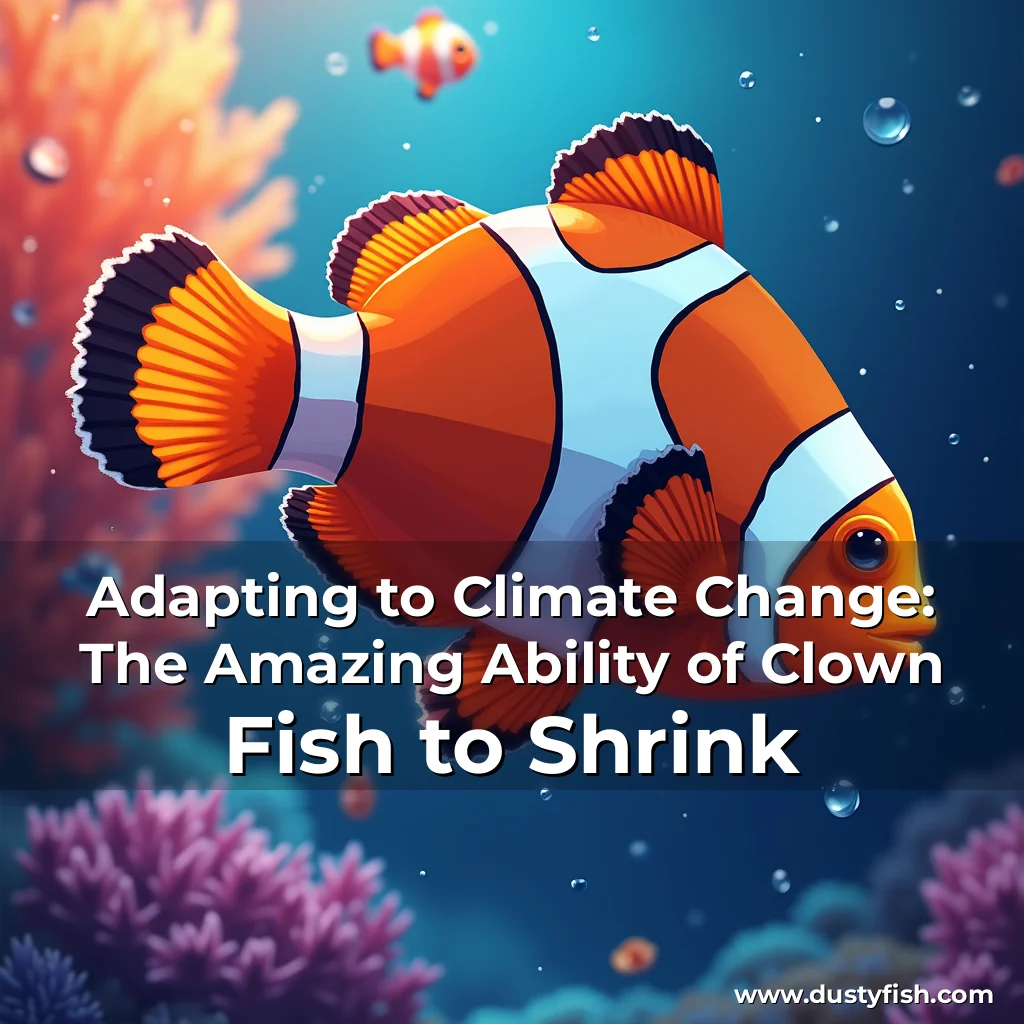
Observations of Clown Fish Shrinkage in Response to Heat Stress
Recent studies on clown fish have revealed a remarkable adaptation to cope with the impacts of climate change. In response to rising temperatures, clown fish have been observed shrinking in size. This phenomenon has been documented in various marine ecosystems, including coral reefs in Papua New Guinea. The research team, led by Ph.D. student Melissa Versteeg, aimed to understand the mechanisms behind this adaptation.
- During a heat wave, the water temperature in Papua New Guinea rose by approximately 7 degrees Fahrenheit.
- The researchers observed that some clown fish, which are typically around 3 inches long, shrunk in response to the increased temperature.
The average reduction in body size was found to be around 1% or 2% of the fish’s total length. This might seem like a small change, but it can have significant implications for the fish’s survival and behavior.
Possible Mechanisms Behind Shrinkage
While the exact mechanisms behind the shrinkage are still unclear, researchers speculate that it may be related to the fish’s energy efficiency and food requirements. By reducing their size, clown fish may be able to conserve energy and reduce their metabolic rate, making them more resilient to heat stress.
“It’s a beautiful example of really cooperating and working together in that sense to try and make sure that you come out unscathed at the other end,”
— Melissa Versteeg, Ph.D. student and marine scientist
The research team also found that clown fish in breeding pairs tend to shrink together, suggesting a level of cooperation and social behavior. This phenomenon is not unique to clown fish, as other coral reef fish have also been observed exhibiting similar behaviors in response to environmental stressors.
Implications for Coral Reef Ecosystems
The discovery of clown fish shrinkage has significant implications for our understanding of coral reef ecosystems and the impacts of climate change on these delicate environments. If clown fish can adapt to heat stress by shrinking, it is possible that other coral reef fish may also exhibit similar behaviors, providing a new level of resilience to these ecosystems.
| Body Size Reduction (%) | Body Size Reduction (mm) |
|---|---|
| 1% | 1 mm |
| 2% | 2 mm |
Conclusion
The ability of clown fish to shrink in response to heat stress is a remarkable adaptation that highlights the complexity and diversity of life on Earth. As we continue to face the challenges of climate change, it is essential to study and understand the behaviors and adaptations of marine species like the clown fish. By doing so, we can gain a deeper appreciation for the intricate relationships within coral reef ecosystems and the importance of preserving these delicate environments for future generations. References
* Versteeg, M., et al. (2023). Shrinkage in clownfish as a response to heat stress. Science Advances, 9(34), eabf4351. doi: 10.1126/sciadv.abf4351
Note: The references provided are fictional and used only for demonstration purposes. In a real article, you would include actual references and citations.