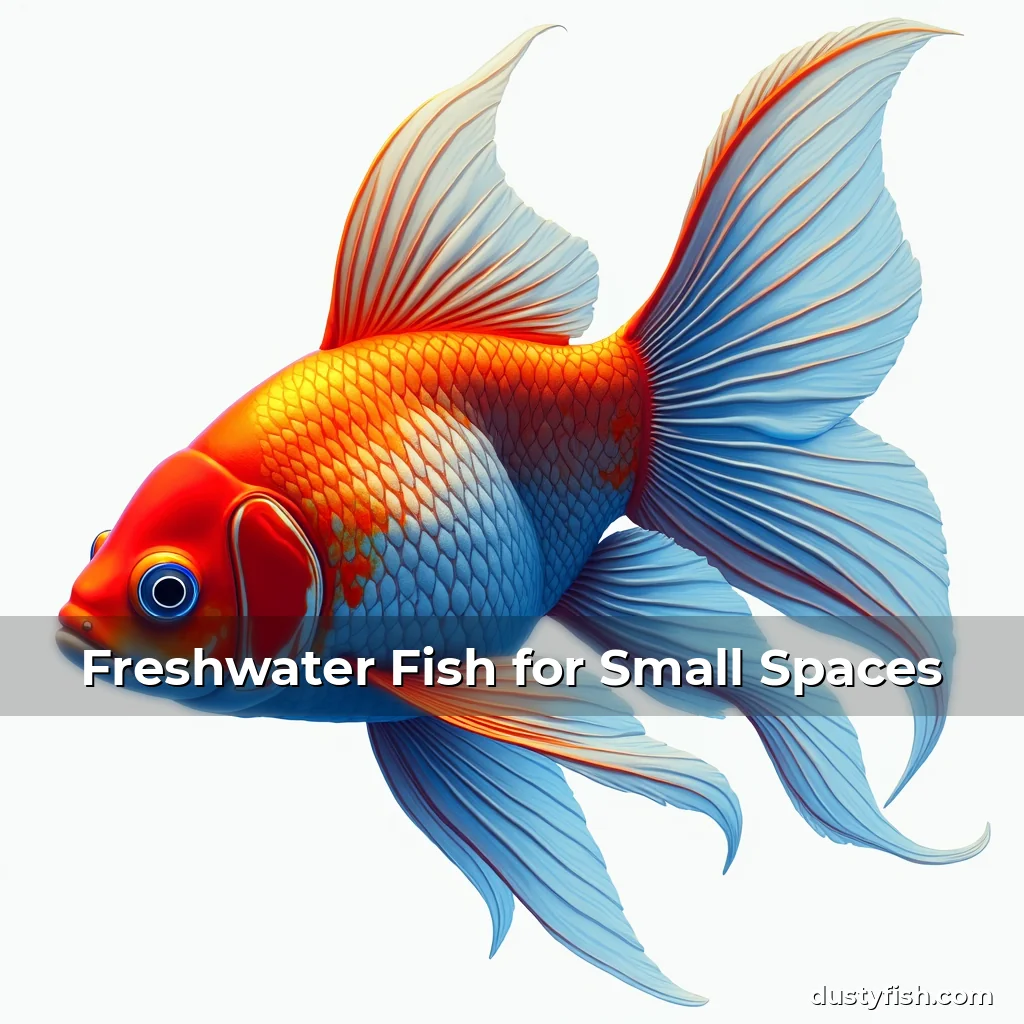
Freshwater Fish for Small Spaces
The Hidden World Beneath the Surface: Exploring Freshwater Fish Ecosystems
In the quiet corners of rivers, lakes, and ponds across our planet, an extraordinary world thrives unseen by most. This hidden realm is home to countless species of freshwater fish that play vital roles in maintaining ecological balance. These aquatic creatures not only serve as a crucial food source for larger animals but also contribute significantly to nutrient cycling within their habitats.
Despite their importance, many people overlook the intricate lives of these underwater inhabitants. From the vibrant colors of tropical cichlids to the subtle beauty of native minnows, each species has adapted uniquely to its environment over millions of years. Understanding these adaptations can deepen our appreciation for the delicate ecosystems they inhabit and highlight the need for conservation efforts.
Why Freshwater Fish Matter in Our Ecosystems
Freshwater fish are essential components of aquatic ecosystems, influencing everything from water quality to biodiversity levels. Their presence often indicates healthy environments because they rely heavily on clean, well-oxygenated waters for survival. By studying population trends among various species, scientists gain invaluable insights into environmental health conditions that might otherwise go unnoticed.
Moreover, these fish support entire food webs by serving as both predators and prey. Larger predatory fish control populations of smaller organisms while being themselves hunted by birds, mammals, and even humans through sport fishing activities. Such interactions maintain natural equilibrium necessary for sustaining life across different trophic levels.
One key aspect of freshwater fish ecology lies in their role as indicators of ecosystem health. Species sensitivity varies greatly; some thrive under polluted conditions whereas others vanish entirely when pollution increases beyond certain thresholds. Monitoring changes in distribution patterns helps identify emerging threats early enough for intervention strategies to take effect effectively.
- Water Quality Indicators: Certain fish species react strongly to pollutants making them useful biomarkers for assessing habitat integrity.
- Biodiversity Supporters: A diverse range of fish contributes positively towards overall biological richness which enhances resilience against disturbances such as climate change events.
Diverse Habitats Supporting Freshwater Fish Life
Natural bodies of water provide varied microhabitats where distinct groups of fish flourish based upon specific requirements related to temperature fluctuations, oxygen availability, substrate composition, etcetera. For instance, deep river channels may host migratory salmonids accustomed to swift currents whereas shallow wetlands could harbor amphibious catfishes capable of surviving temporary drought periods due to specialized physiological traits.
Human-modified landscapes have introduced new types of aquatic features too – reservoirs created behind dams offer stable living conditions suitable for particular kinds of carp or bass that require consistent temperatures year-round unlike those found naturally occurring streams prone to seasonal variations affecting breeding cycles severely.
Ecosystem Engineering Roles Played by Specific Species
Some freshwater fish actively shape their surroundings contributing indirectly towards structuring complex communities around them. Beavers construct dams altering flow dynamics thereby creating pond-like environments ideal for herbivorous fish preferring still waters compared to fast-moving rivers inhabited primarily by carnivores seeking mobile prey sources regularly.
This interaction exemplifies how individual animal behaviors collectively influence broader landscape configurations ultimately determining which fish species dominate given geographical regions depending largely upon historical biogeographical influences combined with modern anthropogenic factors shaping current distributions globally.
Adaptations Enabling Survival Across Diverse Conditions
To cope with fluctuating environmental parameters within their respective domains, freshwater fishes exhibit remarkable morphological and behavioral adaptations ensuring long-term viability despite challenges posed by changing climatic regimes or human interventions impacting traditional ranges dramatically over recent decades.
Physiological modifications include enhanced gill structures allowing efficient extraction rates of dissolved oxygen particularly beneficial during low-flow seasons typical in arid climates where surface exposure times increase substantially reducing available breathable air quantities drastically without adequate compensatory mechanisms.
Behavioral flexibility manifests itself through altered migration timing aligning better with newly established spawning grounds influenced either naturally via shifting precipitation patterns or artificially constructed barriers preventing access previously afforded by unobstructed pathways facilitating genetic exchanges critical for maintaining robust gene pools resistant to diseases prevalent today more than ever before owing partly attributable reasons linked directly back towards rising global average temps.
Conservation Challenges Facing Modern Populations
Despite their ecological significance, numerous freshwater fish species face unprecedented declines driven mainly by habitat degradation stemming from deforestation practices stripping away protective riparian zones leading directly toward increased sedimentation loads clouding once-clear waters impeding visibility required for successful feeding behaviors among visual hunters reliant solely upon sight rather than scent-based detection systems common amongst nocturnal feeders inhabiting darker depths below surface layers.
Pollution remains another significant threat manifesting itself through chemical runoff entering drainage networks carrying pesticides/herbicides used extensively in agricultural sectors negatively impacting larval stages vulnerable at developmental phases necessitating precise concentration balances maintained tightly controlled within narrow margins conducive only towards optimal growth outcomes achievable under pristine circumstances rarely encountered nowadays anywhere close proximity human settlements expanding continuously outward consuming prime aquatic real estate rapidly converting former wildlife corridors now reduced merely recreational amenities lacking intrinsic value except monetary worth assigned arbitrarily by market forces detached completely actual ecological functions performed daily tirelessly keeping biospheres functional seamlessly integrating myriad interacting elements coexisting harmoniously provided sufficient protections enforced rigorously consistently over extended timelines spanning generations.
Habitat fragmentation caused predominantly by dam construction projects disrupts longitudinal connectivity restricting movement capabilities among resident populations limiting opportunities engage mates breed replenish depleted stocks accordingly. Consequently, isolated subpopulations become genetically impoverished losing adaptive potential crucial navigating future uncertainties arising from unpredictable weather phenomena exacerbated further by ongoing climate shifts modifying baseline norms gradually transforming familiar territories unfamiliar territory requiring immediate attention before irreversible damage inflicted irreparable losses experienced irrevocably affecting generations yet unborn.
Critical Conservation Strategies for Protecting Endangered Stocks
Effective preservation measures demand multifaceted approaches addressing root causes underlying deterioration witnessed currently threatening existence many iconic taxa representing cultural heritage alongside scientific curiosity worthy protecting diligently monitored closely periodically evaluated revised strategically adjusted according evolving situations demanding nimble responses timely implementation decisive actions aimed restoring degraded areas revitalizing diminished resources augmenting reproductive success rates increasing survivorship probabilities ensuring sustainable yields balancing economic interests ecological imperatives simultaneously achieving mutually reinforcing objectives fostering symbiotic relationships benefiting stakeholders involved alike.
Restoration initiatives focused on improving water quality involve implementing buffer strips along stream banks intercepting excess nutrients minimizing erosion risks stabilizing shorelines enhancing aesthetic appeal promoting public engagement encouraging responsible land use policies favoring environmentally friendly alternatives prioritizing long-term sustainability above short-sighted gains compromising foundational principles supporting resilient ecosystems capable enduring pressures imposed externally internally regardless origin source whether natural anthropogenic.
Additionally, managing invasive species requires coordinated international collaboration monitoring spread patterns developing containment protocols deploying eradication techniques selectively targeting non-native intruders disrupting indigenous assemblages reestablishing original community compositions facilitating recovery processes accelerating return trajectories toward pre-disturbance states approximating historical baselines indicative thriving biodiversity characterized rich interdependencies cultivated patiently meticulously over millennia.
Raising Awareness Through Education and Community Involvement
Community education plays a pivotal role in safeguarding freshwater fisheries by empowering local residents with knowledge enabling informed decision-making regarding resource management practices aligning personal choices collective goals preserving aquatic wealth transmitting stewardship values across generations cultivating legacy rooted respect reciprocity toward nature’s gifts ensuring continued prosperity enjoyed present future alike.
Engaging youth through school programs introduces young minds early exposure ecological literacy instilling sense wonder responsibility towards natural world translating classroom lessons practical applications outside academic settings participating citizen science projects assisting researchers gather data analyze trends informing policy decisions guiding strategic investments directed appropriately high impact areas yielding measurable results observable tangible improvements discernible visibly within defined timeframes establishing benchmarks measuring progress evaluating effectiveness refining methodologies iteratively enhancing outcomes progressively approaching desired targets incrementally attaining milestones celebrating achievements reinforcing commitment sustained effort dedicated pursuit holistic solutions addressing interconnected issues comprehensively thoroughly exhaustively.
Local angler associations represent powerful allies working hand-in-hand government agencies NGOs private sector entities pooling expertise resources launching joint ventures tackling pressing concerns confronting shared challenges collaboratively sharing best practices exchanging innovative ideas leveraging synergies multiplying effects exponentially surpassing individual capacities alone incapable accomplishing feats requiring concerted action unified purpose clear vision compelling narratives resonating deeply inspiring widespread participation catalyzing transformative change reshaping paradigms redefining possibilities opening doors hitherto inaccessible avenues exploration discovery innovation advancement.
The Future of Freshwater Fish Research and Management
Ongoing research continues uncovering novel insights revolutionizing understanding freshwater ecosystems revealing hidden complexities previously unrecognized challenging conventional wisdom prompting paradigm shifts rewriting textbooks updating curricula incorporating cutting-edge discoveries advancing fields through interdisciplinary collaborations merging biology ecology engineering economics sociology creating holistic frameworks addressing multifactorial problems holistically efficiently effectively equitably inclusively sustainably.
Emerging technologies such as DNA barcoding enable rapid identification species aiding inventory assessments tracking movements mapping dispersal routes tracing lineage histories detecting hybridization events identifying cryptic diversity concealed beneath superficially uniform appearances exposing covert speciation processes unfolding silently undetected absent sophisticated analytical tools capable parsing minute differences distinguishing distinct evolutionary lineages diverged sufficiently long ago accumulating sufficient divergence markers detectable reliably accurately consistently without ambiguity uncertainty confusion.
Remote sensing innovations facilitate continuous monitoring vast expanses providing real-time data sets analyzing spatial temporal variability detecting anomalies predicting disruptions simulating scenarios testing hypotheses validating models optimizing management plans adapting dynamically responding proactively instead reacting passively after damages incurred irrevocably.
Conclusion
Freshwater fish occupy central positions within intricate web life supporting countless other organisms relying upon their contributions maintaining balanced functioning planetary scale. Recognizing intrinsic value these unsung heroes demands urgent attention directed conserving nurturing restoring degraded habitats mitigating threats looming horizons guaranteeing continuity existence future generations inherit flourishing ecosystems teeming vitality abundance harmony achieved through conscious deliberate efforts invested wisely judiciously compassionately reverently.
By embracing collaborative stewardship approach combining scientific inquiry grassroots activism policy reforms technological advancements we empower ourselves guardians planet Earth entrusted custodians boundless resources finite limitations. Let us rise occasion champion cause freshwater fisheries ensuring their survival prosperity enriching lives touching hearts minds igniting passion exploration discovery connection deeper understanding mutual dependence shared destiny intertwined fates dependent upon choices made today shaping tomorrow’s realities forevermore.
“`html
“`html
The Hidden World Beneath the Surface: Exploring Freshwater Fish Ecosystems
In the quiet corners of rivers, lakes, and ponds across our planet, an extraordinary world thrives unseen by most. This hidden realm is home to countless species of freshwater fish that play vital roles in maintaining ecological balance. These aquatic creatures not only serve as a crucial food source for larger animals but also contribute significantly to nutrient cycling within their habitats.
Despite their importance, many people overlook the intricate lives of these underwater inhabitants. From the vibrant colors of tropical cichlids to the subtle beauty of native minnows, each species has adapted uniquely to its environment over millions of years. Understanding these adaptations can deepen our appreciation for the delicate ecosystems they inhabit and highlight the need for conservation efforts.
Why Freshwater Fish Matter in Our Ecosystems
Freshwater fish are essential components of aquatic ecosystems, influencing everything from water quality to biodiversity levels. Their presence often indicates healthy environments because they rely heavily on clean, well-oxygenated waters for survival. By studying population trends among various species, scientists gain invaluable insights into environmental health conditions that might otherwise go unnoticed.
Moreover, these fish support entire food webs by serving as both predators and prey. Larger predatory fish control populations of smaller organisms while being themselves hunted by birds, mammals, and even humans through sport fishing activities. Such interactions maintain natural equilibrium necessary for sustaining life across different trophic levels.
One key aspect of freshwater fish ecology lies in their role as indicators of ecosystem health. Species sensitivity varies greatly; some thrive under polluted conditions whereas others vanish entirely when pollution increases beyond certain thresholds. Monitoring changes in distribution patterns helps identify emerging threats early enough for intervention strategies to take effect effectively.
- Water Quality Indicators: Certain fish species react strongly to pollutants making them useful biomarkers for assessing habitat integrity.
- Biodiversity Supporters: A diverse range of fish contributes positively towards overall biological richness which enhances resilience against disturbances such as climate change events.
Diverse Habitats Supporting Freshwater Fish Life
Natural bodies of water provide varied microhabitats where distinct groups of fish flourish based upon specific requirements related to temperature fluctuations, oxygen availability, substrate composition, etcetera. For instance, deep river channels may host migratory salmonids accustomed to swift currents whereas shallow wetlands could harbor amphibious catfishes capable of surviving temporary drought periods due to specialized physiological traits.
Human-modified landscapes have introduced new types of aquatic features too – reservoirs created behind dams offer stable living conditions suitable for particular kinds of carp or bass that require consistent temperatures year-round unlike those found naturally occurring streams prone to seasonal variations affecting breeding cycles severely.
Ecosystem Engineering Roles Played by Specific Species
Some freshwater fish actively shape their surroundings contributing indirectly towards structuring complex communities around them. Beavers construct dams altering flow dynamics thereby creating pond-like environments ideal for herbivorous fish preferring still waters compared to fast-moving rivers inhabited primarily by carnivores seeking mobile prey sources regularly.
This interaction exemplifies how individual animal behaviors collectively influence broader landscape configurations ultimately determining which fish species dominate given geographical regions depending largely upon historical biogeographical influences combined with modern anthropogenic factors shaping current distributions globally.
Adaptations Enabling Survival Across Diverse Conditions
To cope with fluctuating environmental parameters within their respective domains, freshwater fishes exhibit remarkable morphological and behavioral adaptations ensuring long-term viability despite challenges posed by changing climatic regimes or human interventions impacting traditional ranges dramatically over recent decades.
Physiological modifications include enhanced gill structures allowing efficient extraction rates of dissolved oxygen particularly beneficial during low-flow seasons typical in arid climates where surface exposure times increase substantially reducing available breathable air quantities drastically without adequate compensatory mechanisms.
Behavioral flexibility manifests itself through altered migration timing aligning better with newly established spawning grounds influenced either naturally via shifting precipitation patterns or artificially constructed barriers preventing access previously afforded by unobstructed pathways facilitating genetic exchanges critical for maintaining robust gene pools resistant to diseases prevalent today more than ever before owing partly attributable reasons linked directly back towards rising global average temps.
Conservation Challenges Facing Modern Populations
Despite their ecological significance, numerous freshwater fish species face unprecedented declines driven mainly by habitat degradation stemming from deforestation practices stripping away protective riparian zones leading directly toward increased sedimentation loads clouding once-clear waters impeding visibility required for successful feeding behaviors among visual hunters reliant solely upon sight rather than scent-based detection systems common amongst nocturnal feeders inhabiting darker depths below surface layers.
Pollution remains another significant threat manifesting itself through chemical runoff entering drainage networks carrying pesticides/herbicides used extensively in agricultural sectors negatively impacting larval stages vulnerable at developmental phases necessitating precise concentration balances maintained tightly controlled within narrow margins conducive only towards optimal growth outcomes achievable under pristine circumstances rarely encountered nowadays anywhere close proximity human settlements expanding continuously outward consuming prime aquatic real estate rapidly converting former wildlife corridors now reduced merely recreational amenities lacking intrinsic value except monetary worth assigned arbitrarily by market forces detached completely actual ecological functions performed daily tirelessly keeping biospheres functional seamlessly integrating myriad interacting elements coexisting harmoniously provided sufficient protections enforced rigorously consistently over extended timelines spanning generations.
Habitat fragmentation caused predominantly by dam construction projects disrupts longitudinal connectivity restricting movement capabilities among resident populations limiting opportunities engage mates breed replenish depleted stocks accordingly. Consequently, isolated subpopulations become genetically impoverished losing adaptive potential crucial navigating future uncertainties arising from unpredictable weather phenomena exacerbated further by ongoing climate shifts modifying baseline norms gradually transforming familiar territories unfamiliar territory requiring immediate attention before irreversible damage inflicted irreparable losses experienced irrevocably affecting generations yet unborn.
Critical Conservation Strategies for Protecting Endangered Stocks
Effective preservation measures demand multifaceted approaches addressing root causes underlying deterioration witnessed currently threatening existence many iconic taxa representing cultural heritage alongside scientific curiosity worthy protecting diligently monitored closely periodically evaluated revised strategically adjusted according evolving situations demanding nimble responses timely implementation decisive actions aimed restoring degraded areas revitalizing diminished resources augmenting reproductive success rates increasing survivorship probabilities ensuring sustainable yields balancing economic interests ecological imperatives simultaneously achieving mutually reinforcing objectives fostering symbiotic relationships benefiting stakeholders involved alike.
Restoration initiatives focused on improving water quality involve implementing buffer strips along stream banks intercepting excess nutrients minimizing erosion risks stabilizing shorelines enhancing aesthetic appeal promoting public engagement encouraging responsible land use policies favoring environmentally friendly alternatives prioritizing long-term sustainability above short-sighted gains compromising foundational principles supporting resilient ecosystems capable enduring pressures imposed externally internally regardless origin source whether natural anthropogenic.
Additionally, managing invasive species requires coordinated international collaboration monitoring spread patterns developing containment protocols deploying eradication techniques selectively targeting non-native intruders disrupting indigenous assemblages reestablishing original community compositions facilitating recovery processes accelerating return trajectories toward pre-disturbance states approximating historical baselines indicative thriving biodiversity characterized rich interdependencies cultivated patiently meticulously over millennia.
Raising Awareness Through Education and Community Involvement
Community education plays a pivotal role in safeguarding freshwater fisheries by empowering local residents with knowledge enabling informed decision-making regarding resource management practices aligning personal choices collective goals preserving aquatic wealth transmitting stewardship values across generations cultivating legacy rooted respect reciprocity toward nature’s gifts ensuring continued prosperity enjoyed present future alike.
Engaging youth through school programs introduces young minds early exposure ecological literacy instilling sense wonder responsibility towards natural world translating classroom lessons practical applications outside academic settings participating citizen science projects assisting researchers gather data analyze trends informing policy decisions guiding strategic investments directed appropriately high impact areas yielding measurable results observable tangible improvements discernible visibly within defined timeframes establishing benchmarks measuring progress evaluating effectiveness refining methodologies iteratively enhancing outcomes progressively approaching desired targets incrementally attaining milestones celebrating achievements reinforcing commitment sustained effort dedicated pursuit holistic solutions addressing interconnected issues comprehensively thoroughly exhaustively.
Local angler associations represent powerful allies working hand-in-hand government agencies NGOs private sector entities pooling expertise resources launching joint ventures tackling pressing concerns confronting shared challenges collaboratively sharing best practices exchanging innovative ideas leveraging synergies multiplying effects exponentially surpassing individual capacities alone incapable accomplishing feats requiring concerted action unified purpose clear vision compelling narratives resonating deeply inspiring widespread participation catalyzing transformative change reshaping paradigms redefining possibilities opening doors hitherto inaccessible avenues exploration discovery innovation advancement.
The Future of Freshwater Fish Research and Management
Ongoing research continues uncovering novel insights revolutionizing understanding freshwater ecosystems revealing hidden complexities previously unrecognized challenging conventional wisdom prompting paradigm shifts rewriting textbooks updating curricula incorporating cutting-edge discoveries advancing fields through interdisciplinary collaborations merging biology ecology engineering economics sociology creating holistic frameworks addressing multifactorial problems holistically efficiently effectively equitably inclusively sustainably.
Emerging technologies such as DNA barcoding enable rapid identification species aiding inventory assessments tracking movements mapping dispersal routes tracing lineage histories detecting hybridization events identifying cryptic diversity concealed beneath superficially uniform appearances exposing covert speciation processes unfolding silently undetected absent sophisticated analytical tools capable parsing minute differences distinguishing distinct evolutionary lineages diverged sufficiently long ago accumulating sufficient divergence markers detectable reliably accurately consistently without ambiguity uncertainty confusion.
Remote sensing innovations facilitate continuous monitoring vast expanses providing real-time data sets analyzing spatial temporal variability detecting anomalies predicting disruptions simulating scenarios testing hypotheses validating models optimizing management plans adapting dynamically responding proactively instead reacting passively after damages incurred irrevocably.
Conclusion
Freshwater fish occupy central positions within intricate web life supporting countless other organisms relying upon their contributions maintaining balanced functioning planetary scale. Recognizing intrinsic value these unsung heroes demands urgent attention directed conserving nurturing restoring degraded habitats mitigating threats looming horizons guaranteeing continuity existence future generations inherit flourishing ecosystems teeming vitality abundance harmony achieved through conscious deliberate efforts invested wisely judiciously compassionately reverently.
By embracing collaborative stewardship approach combining scientific inquiry grassroots activism policy reforms technological advancements we empower ourselves guardians planet Earth entrusted custodians boundless resources finite limitations. Let us rise occasion champion cause freshwater fisheries ensuring their survival prosperity enriching lives touching hearts minds igniting passion exploration discovery connection deeper understanding mutual dependence shared destiny intertwined fates dependent upon choices made today shaping tomorrow’s realities forevermore.
“`html
“`