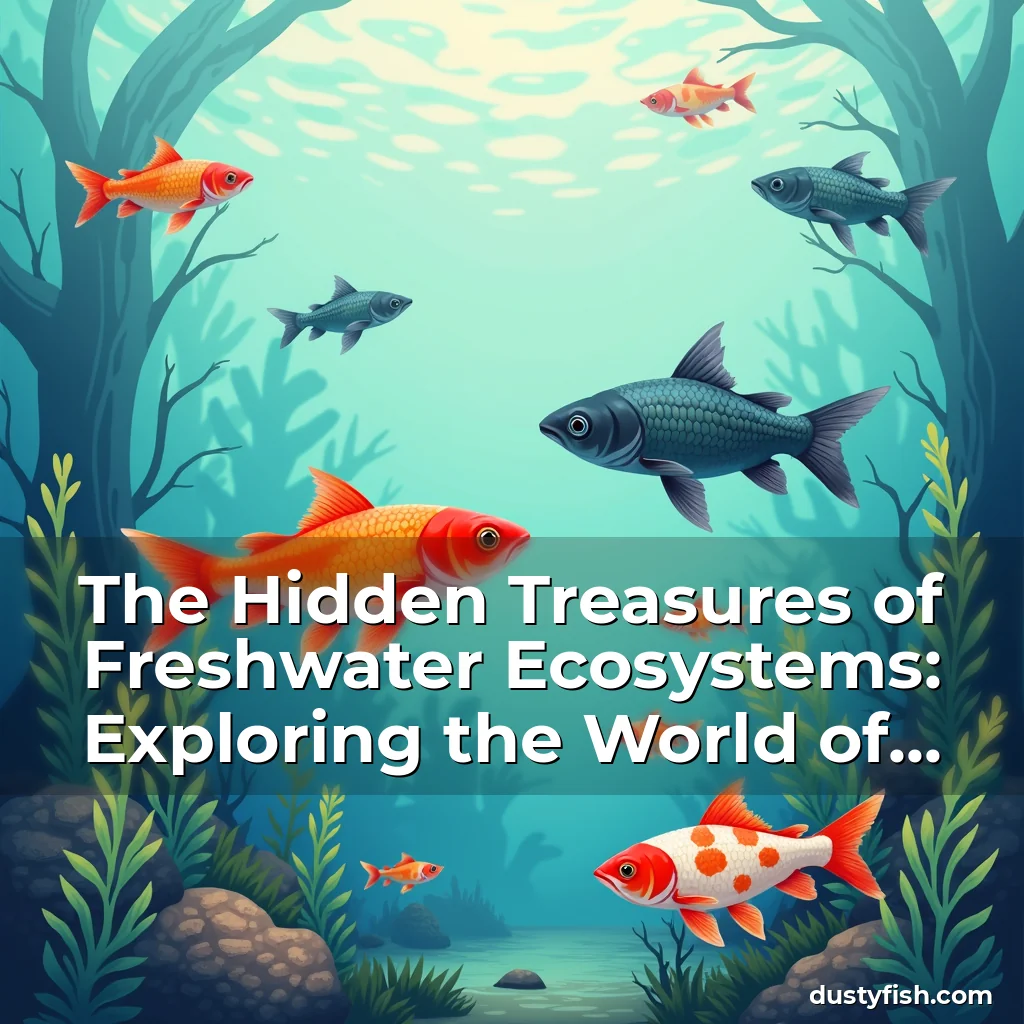
The Hidden Treasures of Freshwater Ecosystems: Exploring the World of Freshwater Fish
Freshwater ecosystems are among the most diverse and vital habitats on Earth, yet they often remain overlooked compared to their marine counterparts. Within these aquatic environments live an astonishing array of species known as freshwater fish—creatures that play crucial roles in maintaining ecological balance while also offering recreational value through angling.
This exploration delves deep into the fascinating world of freshwater fish, uncovering the unique adaptations, behaviors, and conservation challenges faced by these remarkable creatures. From tiny minnows in small ponds to mighty catfish navigating murky river bottoms, each species contributes uniquely to its ecosystem’s health.
Diversity in Form and Function
Freshwater fish exhibit incredible diversity both in physical characteristics and behavioral traits. This variety is largely driven by the vast range of freshwater habitats available across different regions of the globe—from fast-flowing mountain streams to stagnant wetlands—and the distinct environmental pressures each habitat imposes.
Adaptations such as specialized gills for oxygen extraction from still waters, streamlined bodies for swift currents, and camouflage patterns for predator avoidance showcase nature’s ingenuity. These variations ensure survival under differing conditions while allowing for niche specialization within complex food webs.
Consider the betta fish, famous for its vibrant colors and elaborate fins, which thrives in shallow rice paddies where water temperatures fluctuate dramatically. In contrast, sturgeon possess bony plates along their backs called scutes, providing protection against predators lurking beneath lake sediments.
The Amazon basin alone hosts over 3,000 described species, highlighting how geographic isolation combined with varied microhabitats fosters extraordinary biodiversity. Such richness underscores why conserving these ecosystems remains paramount for preserving global fish populations.
- Benthic vs Pelagic Species: Benthic fish inhabit bottom layers near substrates rich in organic matter; examples include carp and certain types of catfish that feed on detritus found at streambed levels.
- Pelagic Species: Pelagic fish prefer open water zones above substrate but below surface level; common representatives here might be bass or trout actively hunting prey mid-water column.
Evolutionary Marvels of Adaptation
Natural selection has shaped numerous evolutionary marvels among freshwater fish, enabling them to survive extreme conditions that would challenge even the hardiest terrestrial organisms. One striking example lies in their ability to tolerate varying salinity levels—an adaptation particularly useful when rivers meet estuaries or during seasonal drought periods.
Salt tolerance mechanisms differ significantly between species. Some develop physiological responses that allow excretion of excess salt through modified kidney structures, while others simply avoid entering brackish areas altogether unless forced by environmental changes like dam construction altering flow dynamics.
In arid regions where water sources become seasonally fragmented, many fish have evolved desiccation resistance strategies including production of antifreeze proteins or development of impermeable skin coverings. The African lungfish exemplifies this trait perfectly, capable of surviving dry seasons by burrowing underground and forming protective mucus coatings around itself until rains return.
These adaptive features demonstrate not only biological resilience but also highlight potential applications in biotechnology research aimed at developing new materials inspired by natural solutions observed in aquatic life forms.
Ecological Roles & Interdependencies
Freshwater fish occupy critical positions within aquatic food chains, influencing nutrient cycling processes essential for sustaining entire ecosystems. As primary consumers feeding on algae, insects, and smaller organisms, they help regulate population sizes preventing unchecked growth that could disrupt ecological equilibrium.
Moreover, predatory species act as top-down regulators controlling herbivorous populations which prevent excessive vegetation consumption affecting water clarity and oxygen availability. This interplay ensures dynamic stability necessary for healthy aquatic communities.
A case study examining Lake Erie illustrates this relationship clearly. Introduction of non-native zebra mussels drastically altered plankton composition leading to declines in native fish stocks due to reduced food supply—a scenario emphasizing the need for careful management practices respecting existing trophic relationships.
Additionally, decomposers like catfish contribute indirectly by consuming dead plant material thereby facilitating decomposition cycles back into usable nutrients benefiting producers higher up in the chain.
Habitat Requirements & Environmental Influences
Variability in habitat preferences among freshwater fish reflects their evolutionary history and current ecological needs. While some require clear flowing waters with high dissolved oxygen concentrations, others thrive in turbid reservoirs characterized by low visibility and minimal light penetration.
Oxygen availability becomes especially critical for cold-blooded vertebrates whose metabolic rates increase proportionately with rising temperatures. Consequently, thermal pollution from industrial discharges poses significant threats to species dependent upon cool, well-oxygenated environments.
Water chemistry parameters—including pH levels, alkalinity, and mineral content—also exert profound influences on distribution patterns. For instance, acidic lakes may support fewer species than those exhibiting neutral or slightly basic conditions because most fish cannot tolerate extreme acidity without suffering physiological stress.
Habitat fragmentation caused by human activities further complicates matters by isolating populations reducing genetic exchange opportunities vital for long-term viability. Constructing dams alters migration routes disrupting breeding cycles and diminishing access to spawning grounds essential for successful reproduction.
Recreational Value & Angler Contributions
Anglers worldwide derive immense enjoyment from pursuing freshwater fish, making sport fishing a multi-billion-dollar industry supported by dedicated enthusiasts committed to sustainable practices. Responsible harvesting techniques coupled with catch-and-release policies help maintain balanced populations avoiding overexploitation concerns.
Local economies benefit substantially from tourism generated by fly-fishing lodges, guided tours, and related services catering specifically to anglers seeking trophy catches. In places like Montana’s Yellowstone region, pristine rivers attract thousands annually contributing millions towards regional budgets through lodging, equipment sales, and transportation costs.
However, unregulated exploitation can lead to severe depletion issues evident in cases involving largemouth bass populations declining rapidly following intensive commercial netting operations. Thus, implementing strict licensing requirements alongside regular stock assessments proves imperative for ensuring continued recreational accessibility.
Conservation groups frequently collaborate with fisheries departments conducting tagging studies tracking movement patterns aiding future stocking decisions based on real-time data rather than historical assumptions alone.
Cultural Significance Across Civilizations
Freshwater fish hold deep cultural significance spanning millennia, serving as dietary staples, spiritual symbols, and artistic inspirations across various civilizations throughout history. Ancient Egyptians revered Nile perch as sacred beings associated closely with fertility deities while Chinese dynasties cultivated carp varieties symbolizing prosperity and good fortune.
Much of indigenous knowledge systems revolve around understanding local aquatic resources through generations of observation and practice. Native American tribes developed sophisticated methods for determining optimal fishing times based solely on lunar phases recognizing subtle correlations between celestial movements and aquatic behavior shifts.
Modern art continues reflecting fascination with these creatures evidenced by contemporary installations featuring illuminated tanks housing rare specimens designed primarily for educational purposes raising awareness regarding conservation status.
Cooking traditions too celebrate freshwater fish preparations ranging from traditional soups simmered slowly overnight to grilled fillets seasoned minimally showcasing natural flavors achieved through precise control over cooking durations.
Threats Facing Freshwater Fish Populations
Rapid urbanization, agricultural expansion, and climate change collectively pose unprecedented challenges threatening freshwater fish biodiversity globally. Pollution resulting from runoff containing pesticides, fertilizers, and heavy metals contaminates waterways harming sensitive larval stages unable to withstand chemical exposure effectively.
Climate change exacerbates these problems by increasing water temperatures beyond tolerable thresholds forcing some species toward extinction while simultaneously creating favorable conditions for invasive aliens better suited to warmer climates thus outcompeting natives for limited resources.
Overfishing remains another persistent issue despite regulatory measures aiming to curb unsustainable harvests. Illegal poaching networks operate clandestinely exploiting loopholes in enforcement regimes depriving law-abiding citizens of fair competition opportunities damaging overall ecosystem integrity unnecessarily.
Restoration projects focusing on reconnecting isolated segments via dam removal initiatives show promise although success depends heavily on coordination between governmental agencies, private landowners, and scientific institutions working collaboratively towards shared objectives.
Conservation Strategies & Success Stories
Various innovative approaches targeting preservation efforts yield promising results demonstrating tangible improvements achievable through concerted action. Habitat restoration programs involve replanting riparian buffers stabilizing banks reducing erosion risks while enhancing shade coverage lowering ambient water temps beneficially impacting coldwater species’ survival chances.
Stock enhancement schemes selectively breed resilient strains possessing enhanced disease resistance qualities then releasing juveniles into depleted wild stocks augmenting numbers gradually restoring depleted populations without compromising genetic purity too severely.
Community-based monitoring frameworks empower locals acting as citizen scientists collecting baseline information essential for tracking population trends identifying early warning signs indicative of emerging threats requiring immediate intervention before irreversible damage occurs.
Successful translocations serve as compelling evidence supporting feasibility of relocation tactics when carefully planned executed under expert supervision minimizing risks associated with introduction failures typically linked poor site suitability evaluations prior deployment.
Future Prospects & Research Directions
Advancements in molecular biology provide novel avenues exploring evolutionary histories tracing lineage connections revealing previously unknown phylogenetic links strengthening our comprehension regarding diversification events shaping present-day distributions witnessed today.
Remote sensing technologies enable continuous surveillance detecting illegal dumping incidents swiftly alerting authorities triggering timely response actions curbing environmental degradation before extensive harm ensues. Integration satellite imagery analytics software allows pinpoint accuracy locating affected zones guiding remediation crews precisely where assistance required most urgently.
Artificial intelligence models predict population fluctuations accurately forecasting potential collapse scenarios prompting preemptive mitigation steps safeguarding vulnerable taxa identified likely candidates facing imminent decline absent proactive interference.
Interdisciplinary collaborations merging ecology with engineering disciplines foster development eco-friendly infrastructure solutions incorporating fish passage design principles ensuring connectivity maintained across landscapes promoting free movement facilitating normal reproductive cycles undisturbed by artificial barriers erected heedlessly disregarding ecological consequences entirely.
Continued investment into aquaculture research seeks optimizing closed-loop recirculating systems maximizing efficiency minimizing waste output aligning commercial interests profit motives harmoniously coexisting alongside stringent sustainability mandates guaranteeing responsible resource utilization practiced consistently without exception.
Conclusion
Freshwater fish represent much more than mere components of aquatic ecosystems—they embody intricate networks interwoven tightly together forming lifelines sustaining countless other organisms reliant upon stable functioning provided exclusively through properly managed hydrological systems operating optimally unimpeded.
By fostering greater appreciation acknowledging inherent worth bestowed upon these invaluable contributors nurturing attitudes valuing preservation priorities over short-sighted gains promises enduring benefits reaping rewards far exceeding initial investments made wisely upfront cultivating legacy lasting generations ahead ensuring thriving communities coexist symbiotically within delicate balances preserved meticulously through conscientious stewardship exercised diligently day after day.

news is a contributor at DustyFish.com. We are committed to providing well-researched, accurate, and valuable content to our readers.